Segway device and principle of operation
Gyro system
Electric motors
Electronic boards
Batteries
For developed cities, the phenomenon of electric transport is less and less a surprise. But what advantages have allowed them to conquer the market?
- Easy to operate - even children can handle them.
- Covers long distances - one battery charge is enough for 20-40 km.
- High speed of movement - on such devices you can pick up a pace of 20 km / h.
- Quiet operation - achieved thanks to low-power electric motors.
- A wide range of applications - from ordinary users to the military.
- Compact dimensions - make it easy to maneuver in the flow of people and store the device at home.
- Environmental friendliness - no harmful emissions into the atmosphere.
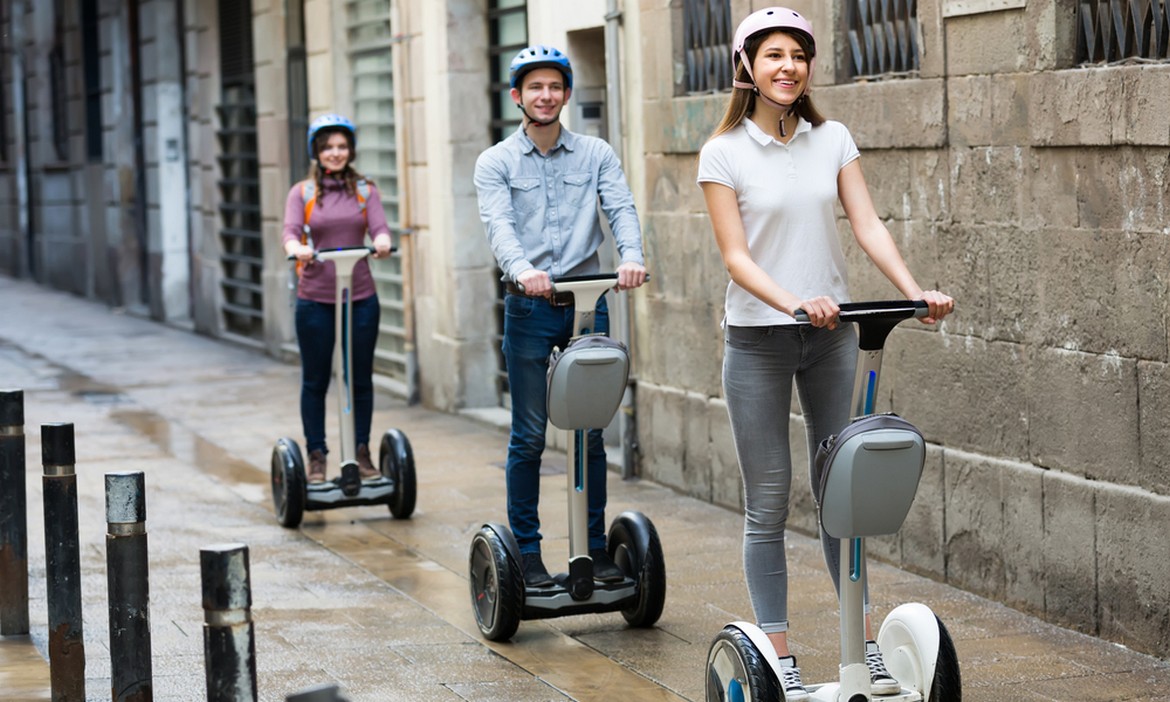
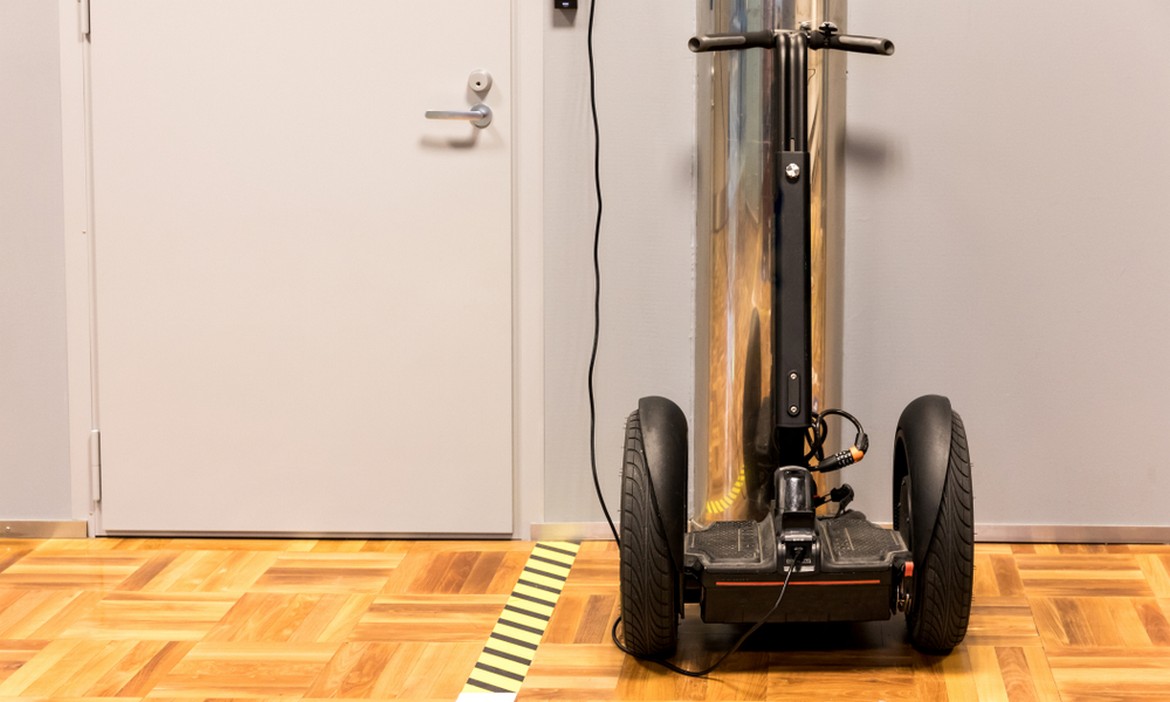
At the first glance at the segway, the main question is asked - how does it work, and why does a person need to bend over to move? In the modern world, the device of such a transport is not complicated - it is made up of electronic boards, a system of gyroscopes, and electric motors that are powered by batteries. With their close collaboration, a fast and safe ride is achieved.
Gyro system
The main feature of segways is the gyroscopes system. These devices are designed to calculate the position in space, sensing the change in orientation angles. Gyroscopes are widespread in the present time, they are used in a wide range of purposes, but mainly in military equipment, where the use of such technology allows you to control combat units with high accuracy and ensure accurate aimed fire at high speed. The principle of Segway control is the role of the rider's body, and the stabilizers reliably understand the angle of inclination. This system provides excellent responsiveness to speed changes and body stabilization relative to the ground. Without the use of gyroscopes in the segway,(hoverboards black friday sale) when the body tilted, a person would simply fall to the ground.
Electric motors
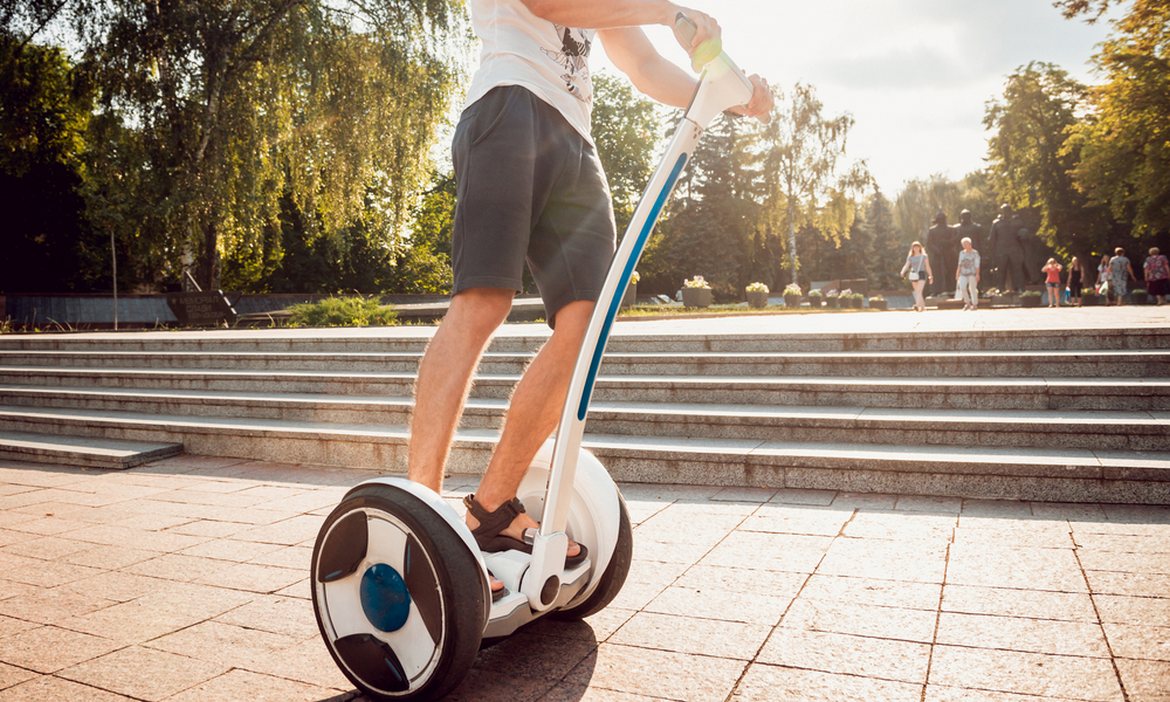
The next component of the Segway's work is wheels with electric motors. The balancing of the rider's position is achieved due to their well-coordinated work in conjunction with the gyro system. When a person is tilted, the signal received from the stabilizers is processed, and the wheels are set in motion. In this case, a simple principle of reaction is applied - the driver leans forward, and the wheels begin to move so that the acceleration force deflects the body back, as a result, we maintain a stable position during the trip. Roll back will reduce the speed, and the vertical level position of the person will tell the segway to stand still.
Turns are carried out by tilting the steering column to the left or right. The principle of operation is reminiscent of tracked vehicles - to deviate the course of movement, one of the wheels rotates faster or slower. This is due to separate electric motors for each of the two axles.
Electronic boards
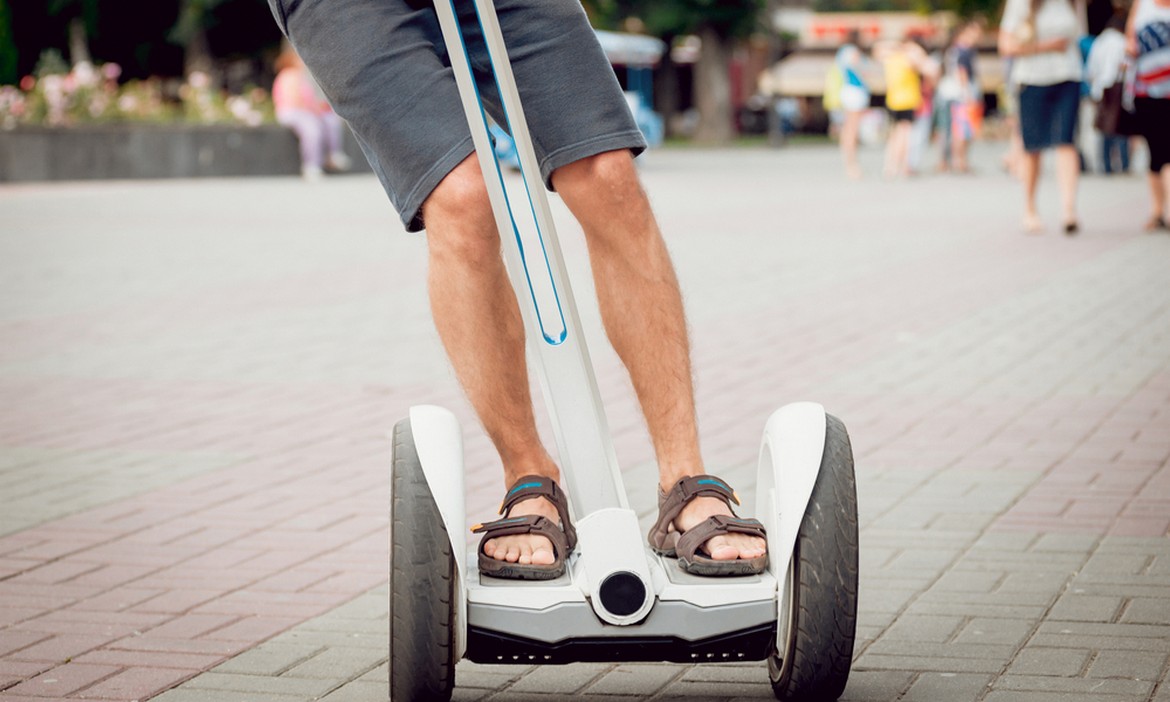
The above devices interact through a system of electronic boards with microprocessors. During the use of the Segway, the orientation of the position in space and the calculation of the parameters necessary to stabilize the position of a person occur continuously until it is turned off. Signals with information are sent about a hundred times per second. They originate in gyroscopes, then the information is fed to the computing processors, which select the efforts of the electric motors required at a given time. Also, the boards monitor the battery charge, which allows you not to be left without electricity in the middle of the road, limit the maximum allowed speed and notify the user about malfunctions.
For the safety of segways, an electronic key system was invented - only its owner can turn on the device.
Batteries
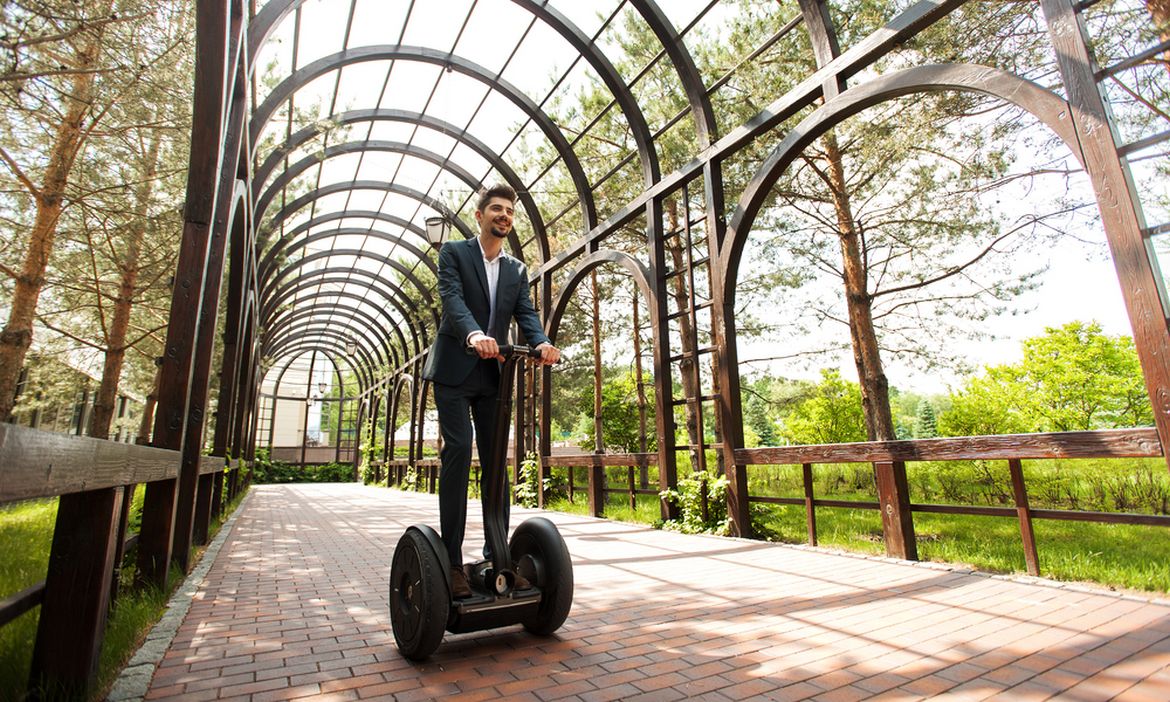
The basis of the Segway is electric current. For long work and overcoming long distances, impressive lithium-ion batteries are installed on such vehicles. The maximum mileage on a single charge depends on the battery capacity, the required efforts of the electric motors under the rider's weight, the speed reached, and a number of other factors. But on average, such transport can drive up to 40 km, or 10 hours of quiet driving. A nice addition is to replenish the battery while descending the mountain.
And to charge Segways is very simple - you need a power supply unit like a laptop and a regular 220 V socket. The process of full charging takes 3-6 hours, depending on the maximum capacity of the batteries.
- Get link
- X
- Other Apps

Comments
Post a Comment